Surfside · Oceanfront Town · Miami-Dade
Surfside sits between Bal Harbour to the north and Miami Beach to the south — with its own town government, its own beach, and an ownership base that is almost entirely end-users. One square mile. Genuinely underpriced for what it delivers.
Surfside is oceanfront — that's where most buyers start. But buyers who arrive expecting a seasonal retreat or a quieter alternative to Bal Harbour usually find something different. It has become a full-time residential market, more active and community-driven than its size suggests, and the people who choose it tend to actually live there.
What matters early is understanding how the market separates. The Four Seasons Surf Club operates at a completely different level — with current listings starting in the high single digits and reaching into the $30M+ range — and attracts a very specific buyer profile. The rest of Surfside — established oceanfront buildings, most built before 2010 — operates with a much broader entry point and a different set of expectations.
Those are not comparable options. They're different decisions, with different buyer profiles, pricing logic, and how the property is actually used. Knowing which segment applies to your decision is the first thing to get right.
Surfside works best for buyers who are looking for oceanfront living without the scale and formality of Bal Harbour. It's a smaller, more lived-in environment — and that's the point. The buyers who fit here are usually choosing it because of how it actually functions day-to-day, not because it was the only option in the price range.
The most important thing to understand before evaluating any specific property is which segment you're in. The Four Seasons Surf Club is its own market — different buyer profile, different pricing logic, different holding patterns. The established oceanfront buildings are a separate decision entirely. Treating them as comparable options at different price points leads to the wrong analysis. Once that distinction is clear, the right buildings become much easier to identify.
New Developments
New and recently delivered buildings currently selling in Surfside. Contact Tamara for current availability.
New Development
Boutique new construction on Collins Avenue. Contact Tamara for current availability and unit details.
Delivered 2020 · Oceanfront
16 ultra-luxury residences by Antonio Citterio and Bodas Miani Anger. Half-floor and full-floor layouts. At 16 units, resale is rare — but when units trade here, they set the pricing ceiling for Surfside's ultra-luxury segment.
New Development
Oceanfront new construction in Surfside. Contact Tamara for current inventory and availability.
New Development
New construction in Surfside. Contact Tamara for current inventory and availability.
Established Luxury
The primary ultra-luxury transaction address in Surfside. 2017 delivery. Five recent closings ranging from $9.8M to $44M. Sets the price ceiling for the market.
New Development · Surfside
34 residences by Fort Partners — two towers at the northern end of the Surf Club campus. Design by Joseph Dirand. Residents access Four Seasons facilities directly. Contact Tamara for current availability.
The Neighborhood
Surfside is a one-square-mile oceanfront town that most Miami buyers overlook — which is precisely why value still exists here. The town borders Bal Harbour to the north and 87th Terrace to the south, with direct Atlantic Ocean frontage and Biscayne Bay on the west side. The housing stock is dominated by mid-century and newer oceanfront condos, with a handful of single-family homes on the bay side. Because Surfside attracts end-users rather than investors, you get a stable, community-oriented ownership base that tends to maintain buildings well and sell rationally. The price gap between Surfside and Bal Harbour is real — and historically, it narrows over time.
The buildings along Collins Avenue — from the original co-ops of the 1960s to the Four Seasons towers — face the Atlantic directly. Bay-side homes and newer single-family construction sit on the intracoastal side of the grid. What Surfside doesn't have is significant investor activity: the ownership profile here skews toward primary residents and long-term holders, which tends to produce buildings with better-maintained reserves and sellers who price more rationally than speculative markets allow. The flip side is that motivated sellers are rarer, and buildings with heavy active inventory at any given time often have specific building-level reasons for the concentration — worth investigating before assuming broad market softness.
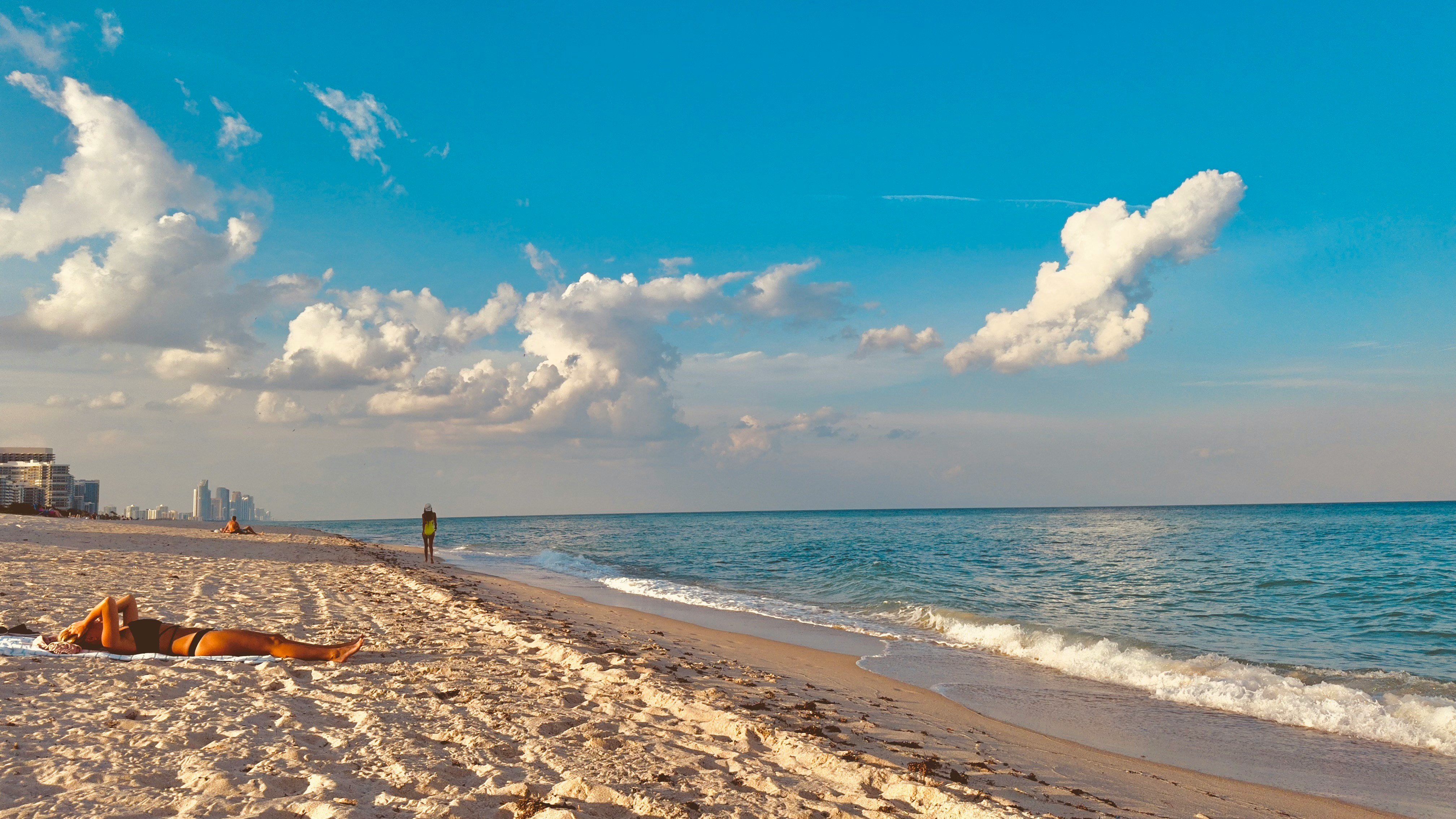
Proximity to Bal Harbour is immediate — the Shops are roughly half a mile north on Collins. The Surfside town center along Harding Avenue has restaurants, a farmers market, and a walkable grid that is genuinely uncommon in Miami-Dade. The beach here is public and runs along the full Collins Avenue frontage, without hotel infrastructure on the Surfside portion of the shore. For buyers evaluating Surfside against Bay Harbor Islands, the distinction is oceanfront access versus intracoastal — two different living experiences at different price levels.
The Surfside Community Center sits directly on Collins Avenue, oceanfront. The pool complex has lap lanes, a plunge pool, a waterslide, a children's activity pool, and a Jacuzzi. More than 90 health and wellness classes run year-round — beach yoga, Aqua Zumba, Pilates. A short distance away on Bay Drive, the remodeled Surfside Park has a kids playground, basketball court, and football field. The town runs year-round family events and resident beach parties with live music and food — the kind of programming that makes Surfside feel like a real community.
On weekends, the Town of Surfside sponsors a farmers market on the beach at 96th Street and Collins Avenue — Saturday and Sunday, 9:30am to 3:30pm. Locally grown produce, farm fresh eggs, local honey, baked goods, artisanal soaps, handmade jewelry, coffee, pottery, pet treats, knife sharpening. Free beach yoga on Sunday mornings.
Buyers relocating from cities where this kind of community infrastructure costs extra — private clubs, paid programs, membership fees — are often surprised to find it included in Surfside simply by living here.
Quick Facts · Surfside
The Market
March 2026 · 90-Day MLS Data
Twenty-one condos closed in the most recent 90-day period at a median of $800,000. That figure includes five Four Seasons Surf Club closings that account for the majority of total dollar volume. Remove the Surf Club and the median is $625,000 at a median of 57 days on market. These two numbers describe different markets sharing a zip code — the Surf Club operates at $2,867 to $7,949 per square foot; everything else traded at $302 to $990.
Eighty-nine condos are currently active. Fifteen canceled or withdrew without a sale in the same period — a 70% failed exit rate. At current absorption pace, the active condo inventory represents over 12 months of supply. Buildings with the heaviest concentration of active listings — Solimar (8 units), The Waverly (7), Azure (5) — have buyers who can wait, compare, and negotiate without urgency.
Single-family: 11 closings at a median of $1.5 million, median 35 days on market. Ten additional SF listings failed — 8 canceled, 2 withdrawn — a 91% failed exit rate. Every SF closing came in below asking; median discount was 10.2%. One canceled listing, 8801 Dickens Ave, ran 422 days before exiting at $1.95 million and is now relisted at $1.925 million. Waterfront Bay Drive properties closed at $2,136–$2,530 per square foot. For a full breakdown, see the Surfside Market Report.
Current Activity · March 2026
The fastest-moving segment in the current data is established waterfront condos priced accurately for their building's recent sales range — 45-day median DOM in the pre-2000 tier. Manatee had two units close at 4 and 5 days, both at or above asking. These are 1974-era units. The speed reflects pricing decisions, not building quality.
New construction has produced no condo closings in this period. Surf Row — a 2027 delivery at 8800 Collins Avenue — has 5 units active at 190 to 273 days on market at $1.375 to $3.536 million. Arte Surfside, Fendi Chateau Residences, and The Delmore (pre-delivery 2029) all have active inventory without closings in this dataset. Buyers in the $1.4–$3.5 million range are currently choosing established buildings over new construction at these price points.
The Four Seasons Surf Club remains the primary driver of ultra-luxury condo volume — five closings between $9.8 million and $44 million, all below asking. The widest discount in that building: $3.1 million below a $12.9 million ask at 93 days. In the single-family market, 9448 Abbott Ave is on its third active listing at $2.478 million after two consecutive cancellations. 8875 Abbott Ave relisted at the exact same price as its prior canceled attempt — $1.399 million — without adjustment.
Free — Q1 2026
21 closings — with the Surf Club context stripped out so the numbers actually make sense. Building-level breakdown across price tiers, velocity signals, and where buyers have leverage right now.
Free. No spam. One email.
No listings. No spam. Unsubscribe anytime.
Surfside is a market where the difference between a good deal and a bad one often comes down to which floor you're on, which direction the unit faces, and what the building's reserve study says. I know those details. Let's talk.