Bay Harbor Islands · North Miami Beach · Miami-Dade
Two barrier islands just north of Bal Harbour — walkable, residential, and one of the few Miami markets where appreciation has consistently outpaced the broader county for the past decade.
MLS data · June 2026 · Full analysis →
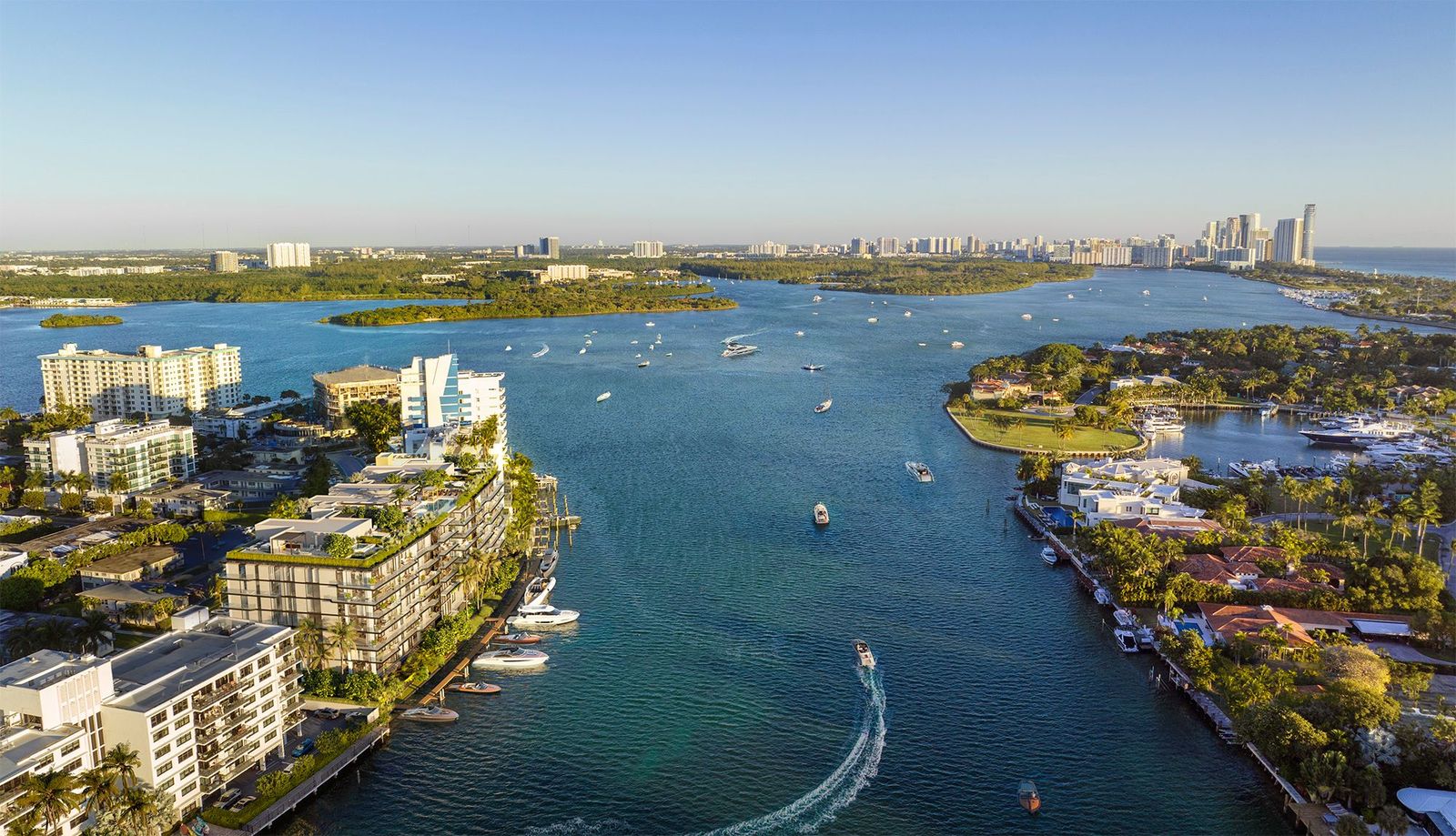
Bay Harbor Islands sits on Biscayne Bay — water on both sides, with views across the Intracoastal toward the ocean and north toward Oleta River State Park. Surfside's beach is a short walk from most addresses. Over the past several years, over a dozen new developments have come to market here, most delivering high-end finishes and amenity programs that compete directly with what's being built in Bal Harbour. Ruth K. Broad Bay Harbor K-8 Center — one of the highest-ranked public K-8 schools in Florida — is on-island. That combination of water setting, new construction at scale, and a school that changes the financial math for families is what's driving the current buyer profile.
The market separates more clearly than the headline numbers suggest. Older condos on the west island — most built between the 1960s and 1980s — and newer bayfront construction on the east side are not competing options. They attract different buyers, carry different due diligence, and move at different speeds. Which side of that divide you're evaluating shapes every question that follows.
Most buyers arrive having already compared Bay Harbor Islands against Surfside or Bal Harbour. That comparison has limits. These aren't interchangeable markets at different price points — and the decision to be in Bay Harbor Islands becomes clearer once you understand what the neighborhood actually is.
Bay Harbor Islands tends to work best for buyers who are clear on what matters to them. If the priority is direct oceanfront living or full-service buildings, nearby areas like Surfside or Bal Harbour usually align more naturally. But when the focus shifts to newer construction, lower carrying costs, and a neighborhood that actually feels residential, Bay Harbor Islands is often where the decision settles.
Where people get stuck is treating these markets as comparable options at different price points. They're not. Bay Harbor Islands is a different kind of decision — one that tends to work better for buyers thinking longer term, rather than trying to replicate a lifestyle from somewhere else.
New Developments
Active new construction and recently delivered buildings currently selling in Bay Harbor Islands. Contact Tamara for current availability.
New Waterfront · East Island · South + North Towers
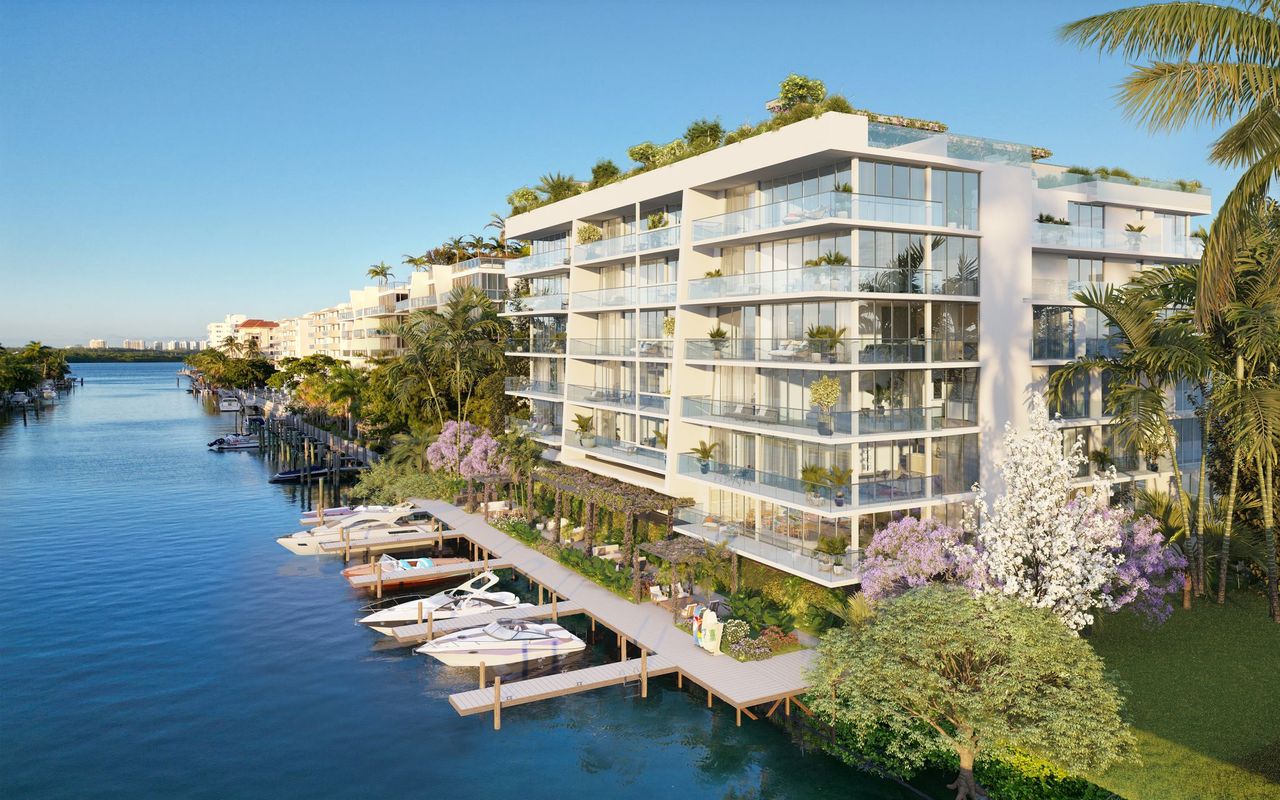
La Baia South delivered in 2024 and is already trading as resale — contact Tamara for current availability. La Baia North is in presale, delivery expected 2026. Between the two towers there are roughly 12 active listings. Three North units canceled, which tells you the upper end is still being negotiated. Buyers comparing this to Bal Harbour new construction will find similar bay exposure at meaningfully lower price per square foot — for now.
Now Delivering
44 residences, all with direct water views. Kobi Karp architecture, Stephen G interiors — both known for precision at this price point. Configurations range from 2BR to penthouse at 4,900 SF. 13 boat slips up to 50 ft, the largest marina allocation in BHI new construction. Six-month rental minimum. Developer PPG. September 2026 delivery.
New Development
Wellness-focused residences by Terra. Arquitectonica architecture, Meyer Davis interiors. Amenity program includes bath house, saunarium, caldarium, halotherapy steam, cold dip, infrared and sound dome, IV therapy, rooftop pool, and beach club. Units include air purification, aromatherapy diffusers, affusion shower, skincare fridge, and Sub-Zero/Wolf appliances. Florida Green Building certified.
New Development
23 residences with zero-bridge water access and 10 purchasable boat slips. 9,000 SF rooftop with Finnish overflow saltwater pool.
New Development
9 residences by Islands Development Group. Private elevator arrival per unit, dual terraces for sunrise and sunset exposure. Sister building to MILA.
New Development
9 residences by Islands Development Group. Private elevator arrival, dual terraces. Sister building to ALMA one block north.
New Development
Three buildings — Regency (33 units), Signature (9 units), and Bay Collection (9 units). Kobi Karp architecture, Debora Aguiar interiors. Boat slips available. Custom Poliform kitchens and Miele appliances throughout.
New Development
27 residences by VDA Development. Revuelta architecture, Artefacto interiors. Non-waterfront positioning with an accessible entry point into BHI new construction.
New Development
Three-level luxury townhomes with private rooftop terrace by Regency Development Group. 2,375–2,976 SF across 3–4 bedrooms. Two-car private garage and interior elevator. Contact Tamara for current availability.
The Neighborhood
Bay Harbor Islands functions like a town in a way most Miami neighborhoods don't. The center of that is Ruth K. Broad Bay Harbor K-8 Center. It's not just a school — it shapes how the entire area moves during the week. Mornings and afternoons are visible. Parents walk their kids. You see the same crossings, the same routines, the same families day after day. That consistency is what gives the neighborhood structure.
Kane Concourse carries most of the daily activity. Coffee in the morning, lunch spots that stay busy, salons, medical offices, everyday services — all within a few blocks. It's not built to feel busy, but it covers what people actually use without needing to leave the island.
There are also smaller moments that bring people together. Movie nights, local events, and occasional pop-ups — nothing oversized, but enough to create a sense of familiarity. You don't have to plan for it. You just start to recognize it. The Bay Harbor Islands Arts Festival is one of the few times the pace shifts — it brings in local artists and draws more people into the area, but it still stays aligned with the scale of the neighborhood.
The rhythm here is quieter, but not empty. It's shaped more by repetition than by events — the same places, the same routes, the same interactions. That's what makes it feel settled. For many buyers, especially families, that consistency becomes more important than constant activity.
For buyers coming from cities where this kind of structure requires effort — long commutes to school, planned schedules, multiple neighborhoods — the difference is immediate. Here, daily life compresses into a smaller, more manageable footprint. Not activity, but consistency — with just enough happening to make it feel lived in.
The Market
On paper the market looks broad — 167 active condos, ranging from roughly $270K to $6.25M — which tells you less than it sounds, because these aren't competing products. The 1960s and 70s buildings on the west island trade around $250–$650K for one- and two-bedroom units. They don't share buyers with new construction like Onda Residences, La Baia, or THE WELL.
Median closed price in June: $745K, at a median of 99 days on market and $428 per square foot. Those numbers are shaped heavily by older inventory, which sits longer and trades lower. New construction closed at its own basis in the same period — an Onda Residences unit at $4.2M and a 2026 La Baia residence at $1.58M — well above where the resale median sits.
The more revealing number is the failed-to-closed ratio: 12 condos closed in June against 9 that were canceled or withdrawn — roughly three failed exits for every four that closed. Sellers testing prices above what comparable closings support are sitting for months, then pulling. This has been most visible in the 2003–2013 resale segment, where buyers now compare directly against new construction at a modest premium.
Single-family is a thin market — 6 active listings priced from $6M to $34.5M, dominated by recent and new construction. June produced two closings that show the spread: a 2026 waterfront home on Broadview Drive traded at $21.77M in six days, while a 1973 home on Kane Concourse closed at $3.85M only after 94 days. Contrast that with Surfside single-family, where the entry point and buyer pool are meaningfully different.
New construction is clearing at its own basis. An Onda Residences unit closed at $4.2M and a 2026 La Baia waterfront residence at $1.58M. These are the transactions setting the baseline for what finished product is worth here — a different conversation from the resale market a few buildings away.
Mid-market and resale waterfront is moving when priced at or near the last comparable: Montego Club at $870K, O Residence at $850K, 10000 Plaza at $640K. The pattern is consistent — buyers in this range make offers where there's a clear precedent and not much room to argue.
Unrenovated older units are the most stalled segment. The June closings at Summit, Island Pointe, and Longwood Towers each took more than 160 days to clear and traded below ask. The renovation math doesn't work at current asking prices for most buyers, and sellers haven't fully adjusted. These are the listings most likely to trade at a discount — or sit.
For a deeper read on what's driving these numbers, the Bay Harbor Islands Market Report goes further into building-level patterns and pricing pressure signals.
Ten years inside Bay Harbor Islands means I know which buildings have the strongest financials, which floors get the bay breezes, and which sellers are actually motivated. I'll give you the honest version — not the version that closes a deal.