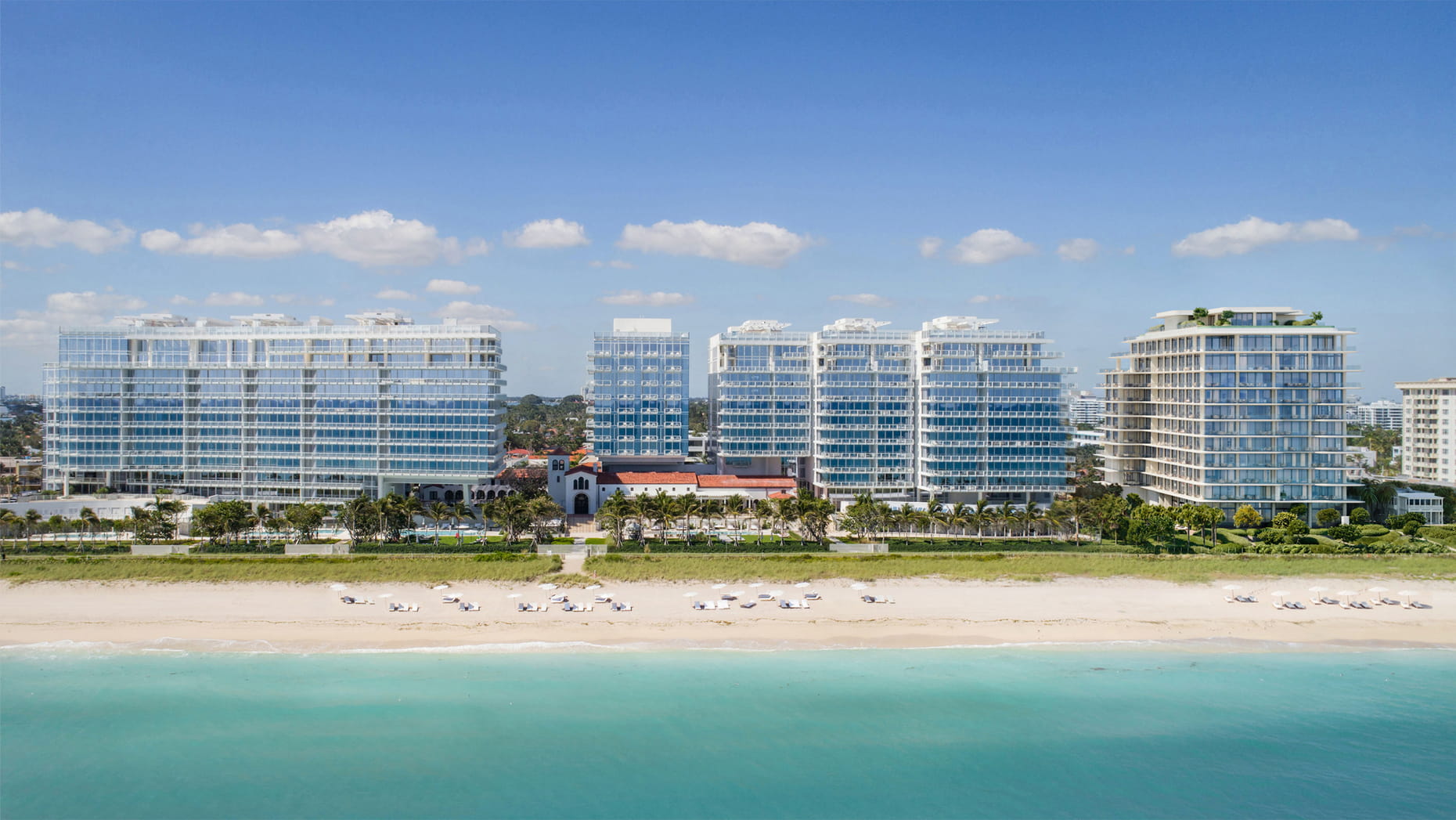
The Surf Club is the building that makes Surfside's market statistics difficult to read. Five Surf Club closings in a recent 90-day period — ranging from $9.8M to $44M — accounted for a disproportionate share of Surfside's total closed volume. Strip those five transactions out, and the neighborhood's median looks completely different. That's not a criticism; it's a market structure observation. The Surf Club is operating in a category largely separate from the rest of Surfside.
Building Overview
One hundred forty-four residences spread across two 12-story towers, part of a larger campus that includes the Four Seasons Hotel. Delivered 2017. Residences range from 1,800 to 7,800 square feet with ceiling heights up to 20 feet. The entry at 1,800 square feet is the smallest in any of the Surfside buildings covered here — but the price at entry reflects the branded service model rather than the square footage alone. Floor-to-ceiling glass throughout, private residential lobbies with a Four Seasons arrival experience, and access to the full hotel service stack.
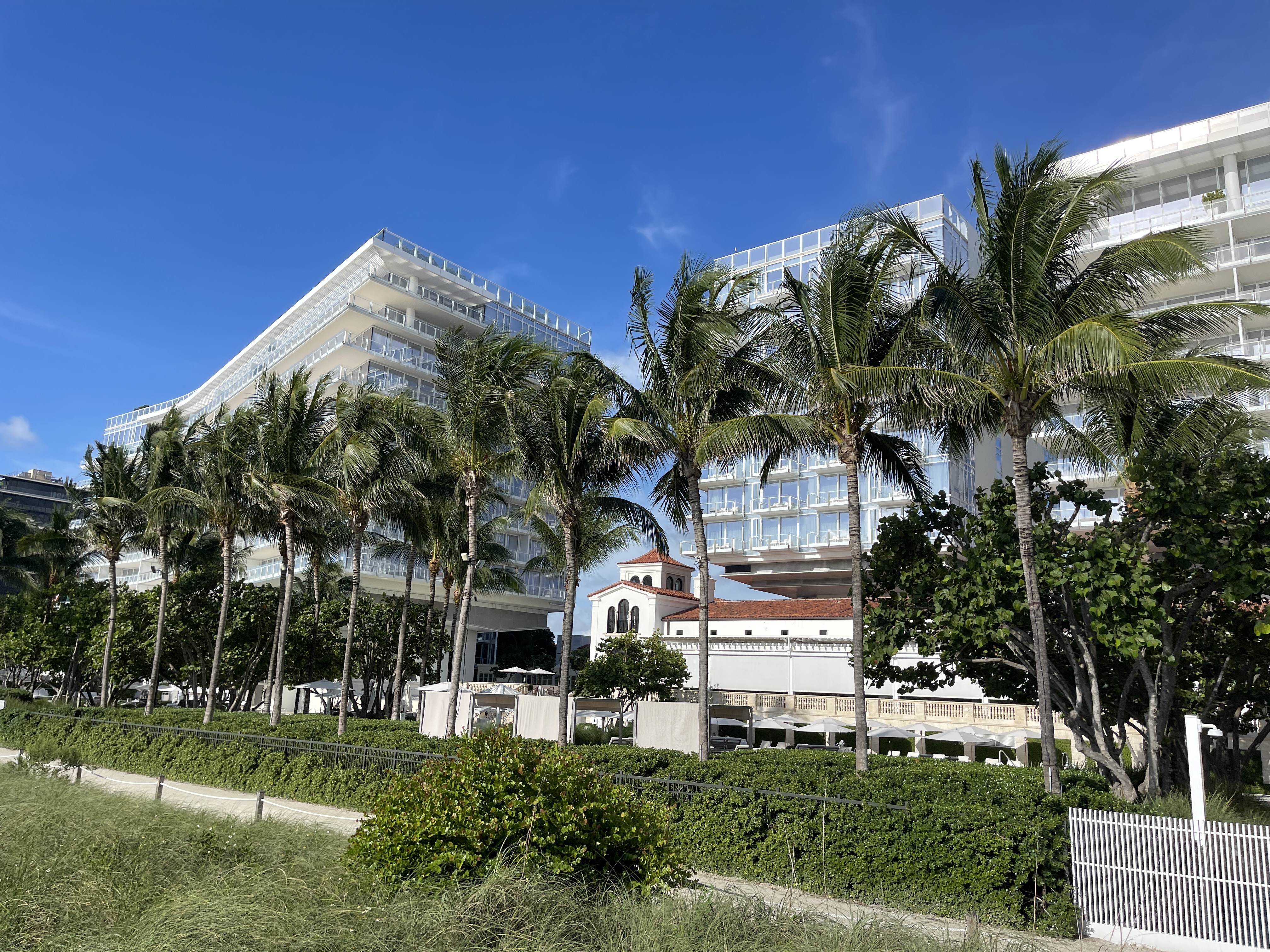
The historic 1930 Surf Club building by Russell Pancoast is preserved within and integrated into the development. The original club hosted guests including Marlene Dietrich, the Duke and Duchess of Windsor, and Frank Sinatra during its mid-century peak. The preservation of that structure isn't decorative nostalgia — it is a specific part of what The Surf Club campus offers buyers who respond to provenance alongside contemporary building quality.
À-la-carte services available to residents include butler service, pre-arrival provisioning, in-residence housekeeping, in-residence spa treatments, in-residence dining, and grocery provisioning. Pool and beach service, the Four Seasons Spa and Fitness Center, restaurants with interior and terrace seating, a dedicated Four Seasons concierge, and children's programming are part of the resident offering.
Architecture & Developer
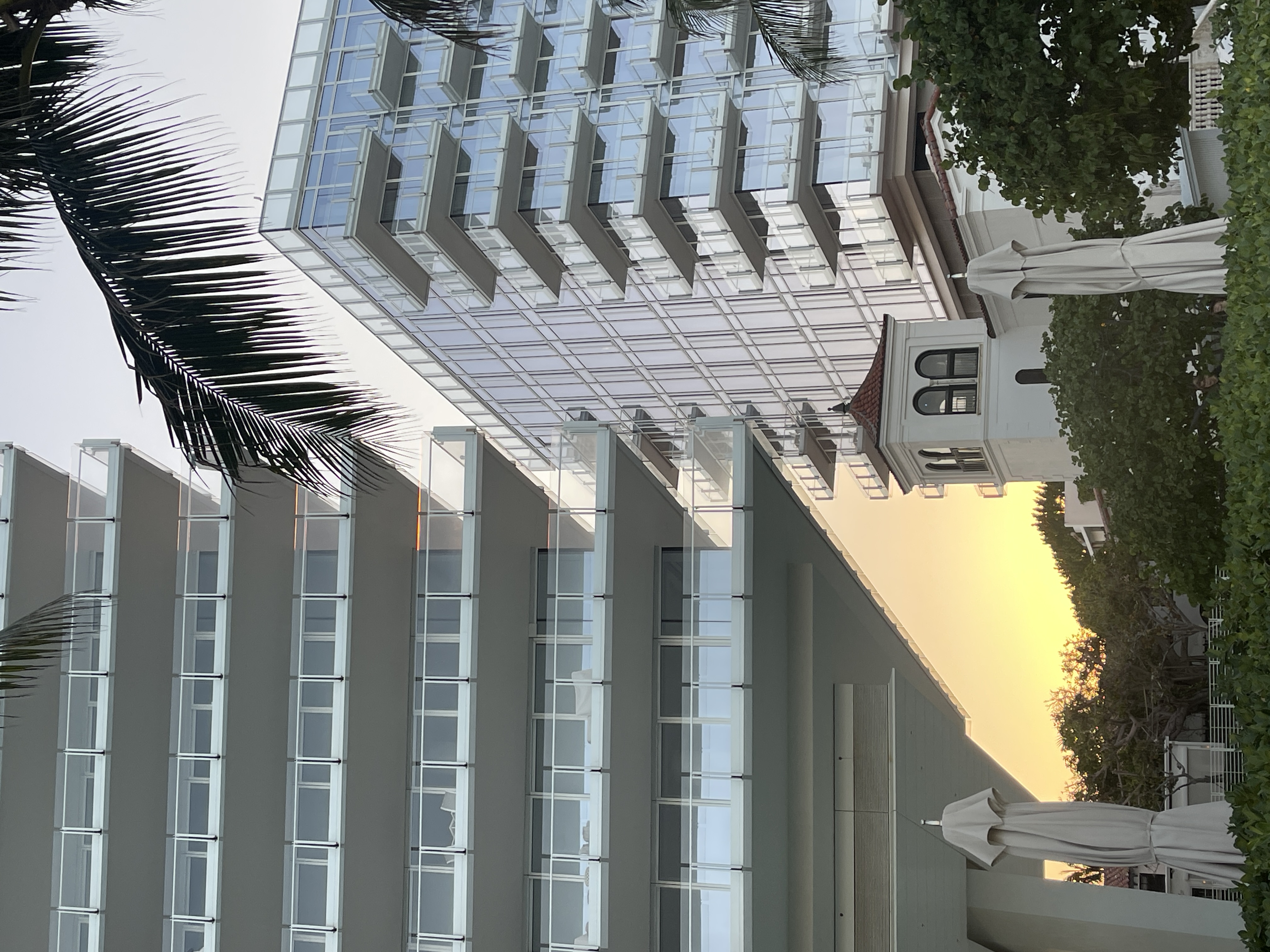
Richard Meier won the Pritzker Prize in 1984 — the Nobel equivalent in architecture. His portfolio includes the Getty Center in Los Angeles, the Barcelona Museum of Contemporary Art, and the Jubilee Church in Rome. At the time of The Surf Club's development, a residential commission from Meier was a genuine architectural event. The building reflects his established formal language: white surfaces, geometric precision, the organization of space around light rather than program.
Two residential towers at 12 stories each, within a campus that also includes the Four Seasons Hotel, the preserved 1930 clubhouse, and the surrounding grounds. This campus structure is unusual — residents are living adjacent to a hotel rather than in an independent building. For some buyers, that integration is the point: hotel services on demand, managed beach program, restaurants operated by a Four Seasons culinary team. For others, the hotel adjacency is a reason to look elsewhere. Understanding which category you fall into before visiting units saves time.
Buyer Profile
The buyer who chooses the Surf Club is usually not comparing it primarily against other Surfside buildings. The comparison is more often against Bal Harbour's St. Regis or Oceana — other full-service branded residences in adjacent markets. The service model and the branded infrastructure are the primary draw. These buyers typically own multiple properties; the Surf Club functions as their Miami base, and the hotel operations model minimizes the friction of managing a property they may use for only part of the year.
International buyers are a significant share of this pool — the Four Seasons brand carries institutional recognition globally that no independent building in this market can match. European buyers, Latin American buyers, and Middle Eastern buyers who travel extensively and expect a specific level of managed residential service find the Surf Club model familiar and comfortable. For these buyers, the building's position in Surfside rather than Bal Harbour is a secondary consideration; the Four Seasons brand is the primary one.
The 1,800-square-foot entry also attracts buyers who want the brand and the service at a smaller unit size than the building's upper floors command. Entry-level Surf Club ownership is a different financial commitment than a penthouse, but it carries the same service access.
How It Fits the Market
The Surf Club is why Surfside's aggregate market statistics require careful interpretation. The building's recent closing range ($9.8M–$44M) reflects a market tier that doesn't interact with the rest of Surfside's mid-market. This is useful context for buyers and sellers in the $600K–$2M Surfside range, who are operating in a fundamentally different market even if they share a town boundary with the Surf Club.
For buyers above $5M who are evaluating Surfside against Bal Harbour, the Surf Club is the building that makes Surfside competitive at the ultra-luxury tier. Without the Surf Club, Surfside doesn't have a building that matches Bal Harbour's St. Regis or Oceana on service infrastructure. With it, the comparison becomes a genuine lifestyle choice between adjacent markets. For Surfside's full building landscape, see the Surfside real estate overview and the Surfside vs Bal Harbour comparison.