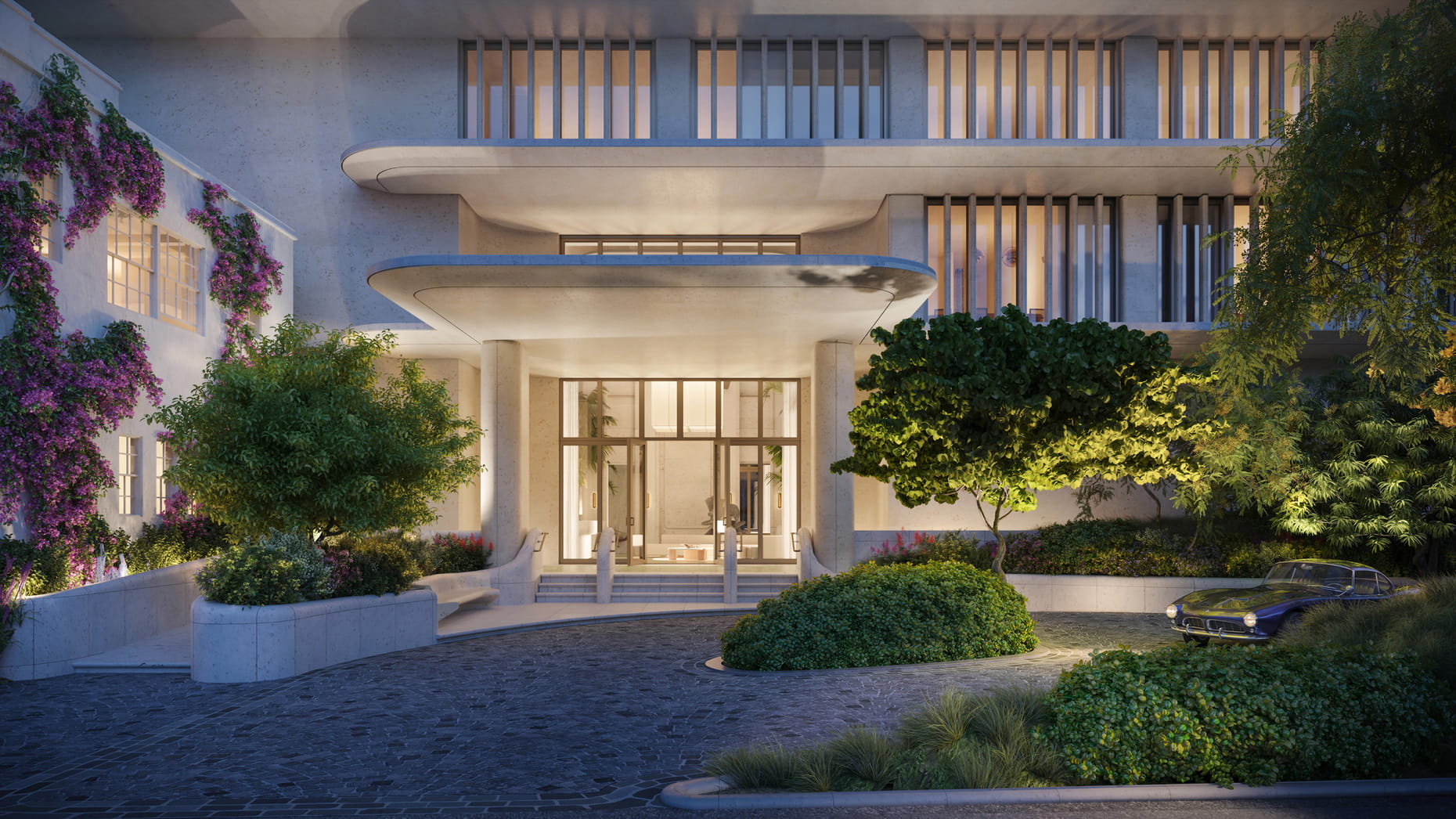
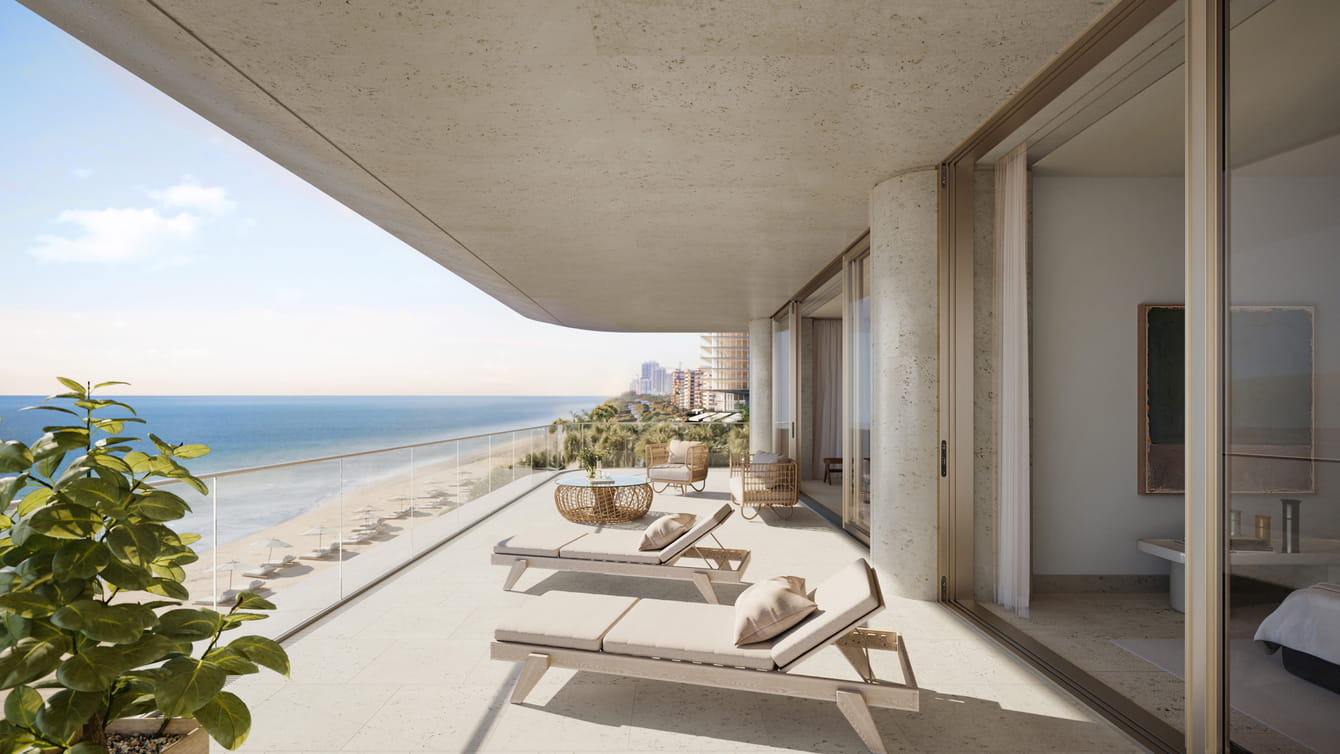
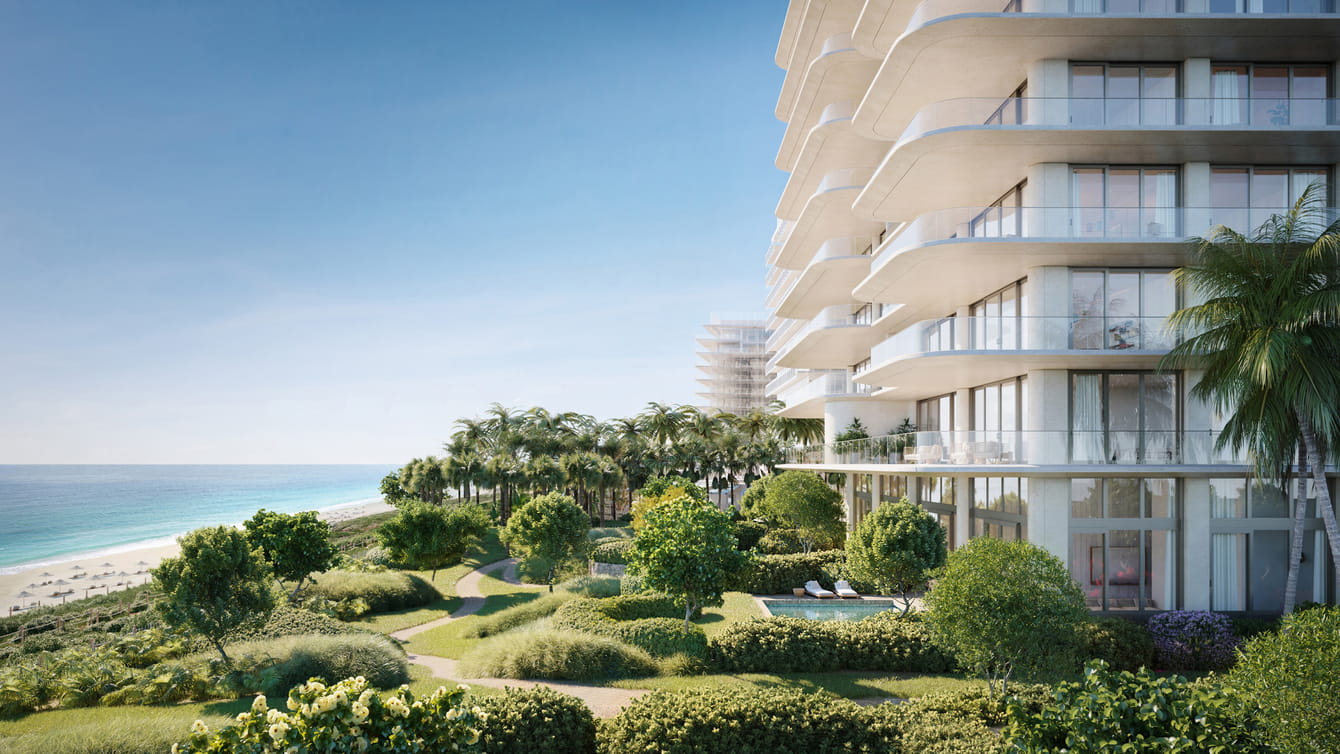
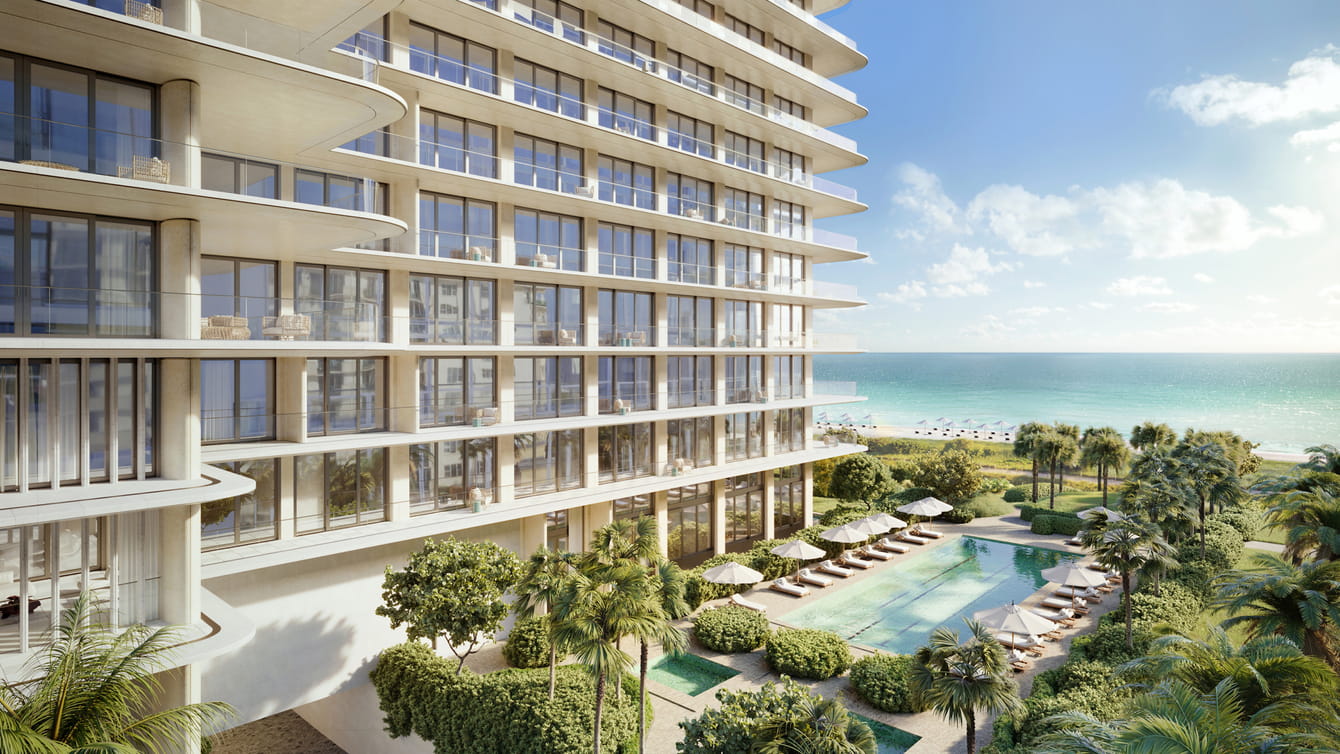
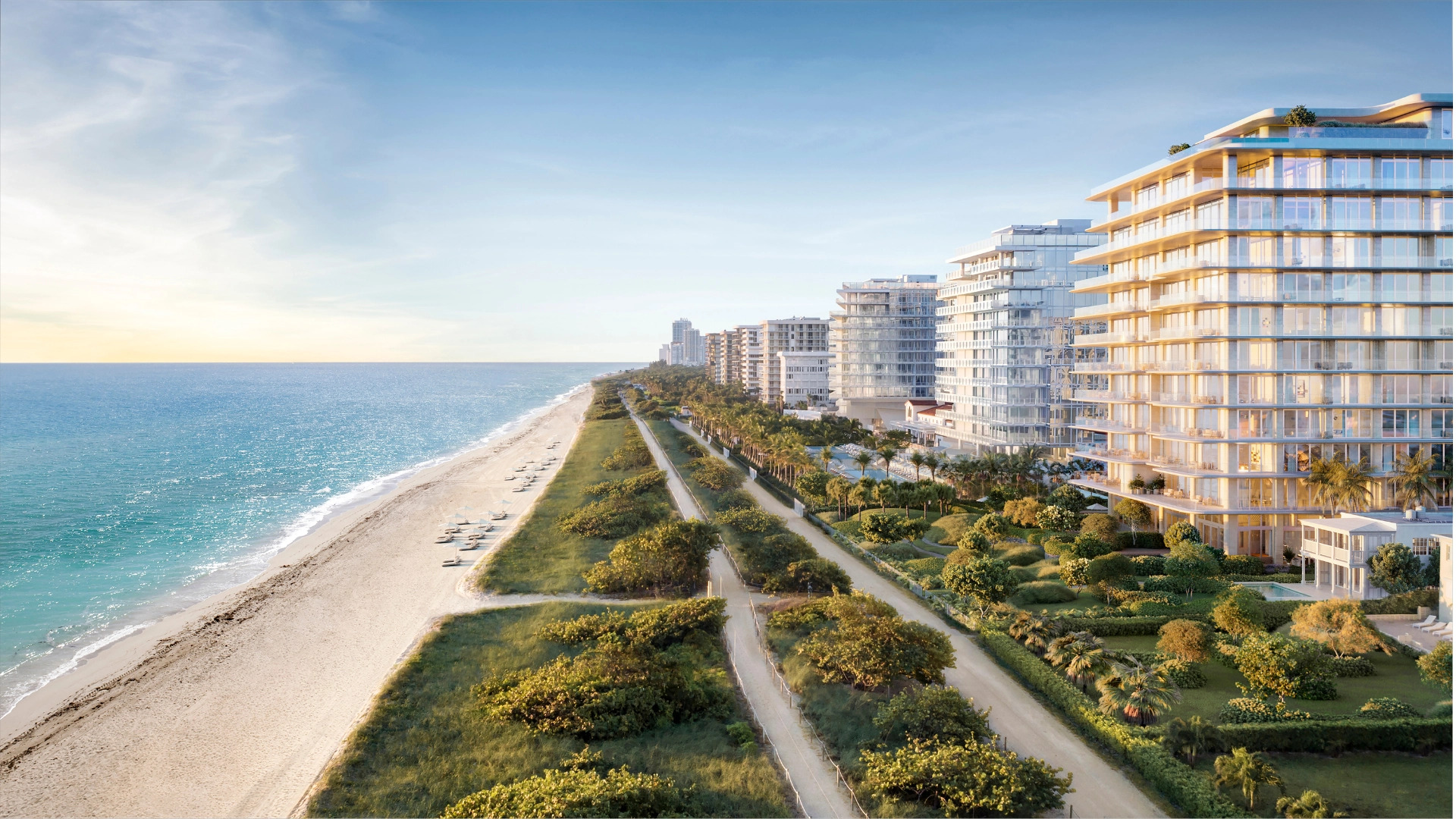
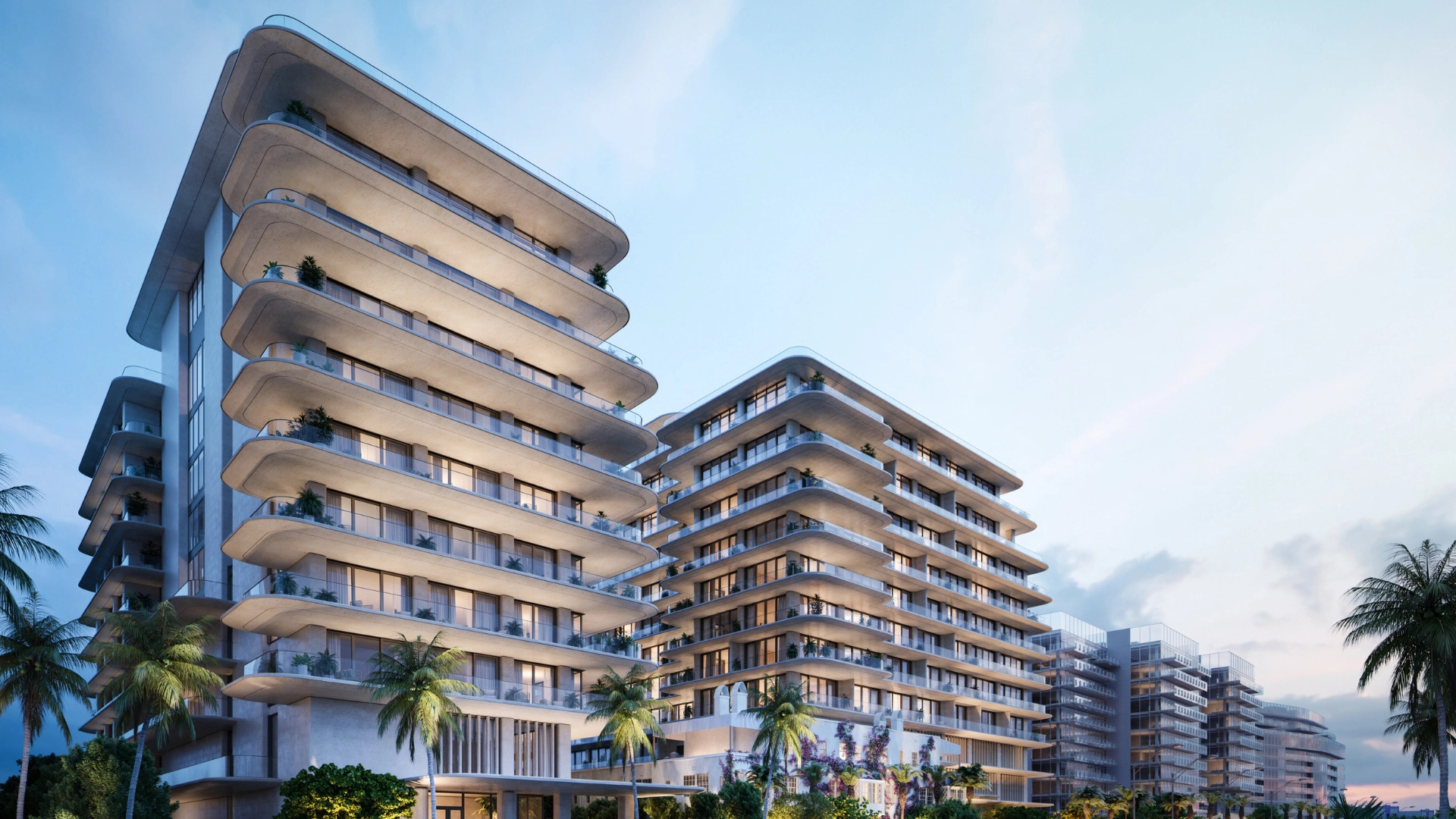
Seaway at The Surf Club occupies the northern end of the Surf Club campus — Seaway South at 9149 Collins Avenue, Seaway North at 9165 Collins Avenue. Two towers, 34 residences. The kind of scale where the building doesn't disappear into its surroundings but doesn't dominate them either. You notice the proportions before you notice the address. The stone and glass facades read quietly against the sky; the terraces have real depth rather than the minimal extrusions most oceanfront buildings treat as adequate. Delivered 2024.
Building Overview
Thirty-four residences across two towers — Seaway North and Seaway South — ranging from 1,200 to 8,000 square feet. The North Tower is organized around full-floor residences with flow-through views from Biscayne Bay to the Atlantic, a configuration that requires the building to hold a certain width without compromising either exposure. The South Tower includes beachfront and bay-facing units alongside three beachfront villas. Three rooftop penthouses complete the collection. Private elevator access throughout.
The Four Seasons Surf Club is directly adjacent, and Seaway residents access its facilities without the barrier that normally separates neighboring buildings. In practice, that means staffing depth, service infrastructure, and amenity programming at a standard a 34-unit standalone building doesn't generate on its own — fitness, spa, beach service, dining, concierge. The campus model is the operative fact here.
Design
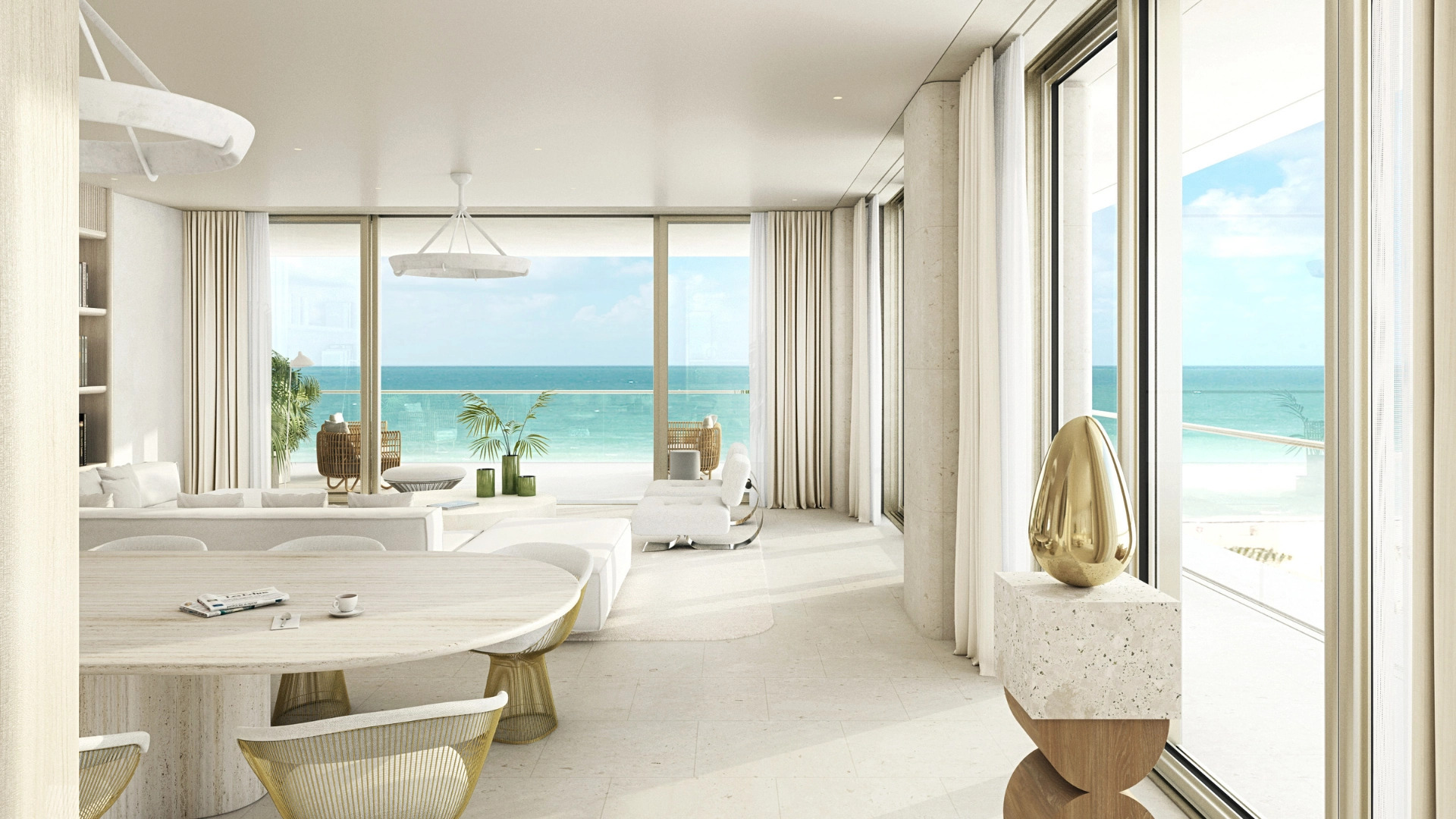
Joseph Dirand designed Seaway's residences around a register that he calls classic European modernism — but in practice it reads as something more specific: stone and glass facades, sculpted terraces proportioned to actually use, generously scaled interiors that don't sacrifice livability for visual effect. The material palette runs toward timeless rather than current: stone, glass, and crafted details that hold up to time rather than announcing themselves. The arrival sequence is discreet — a deliberate transition from Collins Avenue into a building that operates at a different pace than its surroundings.
The landscape is by Peter Wirtz, a Belgian landscape designer whose work is recognizable for its layered, architectural planting rather than tropical maximalism. The tropical vegetation connecting Seaway to the Surf Club campus is not decorative — it's the physical tissue between two buildings that need to feel like one place.
Developer
Fort Partners developed the Four Seasons Surf Club and has remained the steward of that campus through Seaway. The significance of that continuity is practical: the developer has a vested interest in how Seaway performs within the wider campus, which shapes construction standards, material selection, and the relationship between the two projects. The Surf Club's original 1930 history — Churchill, Elizabeth Taylor, the Hollywood era — is context, not marketing. What Fort Partners built is a coherent enclave that holds together architecturally and operationally.
How It Fits the Market
Seaway is the most campus-integrated building in Surfside. For buyers comparing it to other oceanfront boutiques — Ocean House at 9317 Collins, Arte at 8955 Collins — the distinction isn't scale or design alone. It's structural. Ocean House and Arte are independent buildings. Seaway is part of a functioning hotel and residential campus, which changes the service model, the amenity reality, and the day-to-day experience of ownership.
For buyers who want the Surfside address with the operational depth of a branded residence, Seaway is the only building in the immediate market that delivers both. For buyers who value independence and prefer a freestanding building, that same campus relationship is the tradeoff rather than the feature. See the Surfside real estate overview and the Four Seasons Surf Club page for broader context on the campus.