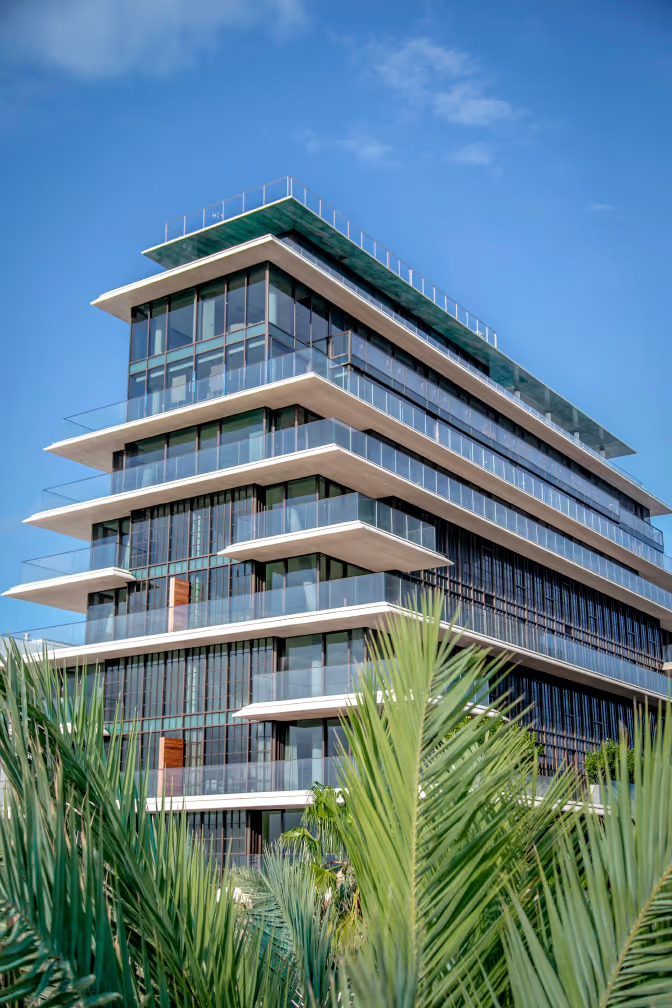
Arte is a building that resists the standard evaluation framework. It has 16 residences. It is oceanfront. It is completed and trading as resale. Those facts matter, but they don't explain why buyers who can afford any building in Surfside choose Arte specifically. The reason is Antonio Citterio — and for the buyers Arte attracts, that name is the starting point, not a footnote.
Building Overview
Arte occupies 8955 Collins Avenue — mid-Surfside, between the southern residential cluster and the Surf Club at 96th Street. Sixteen residences across 12 floors. Unit configurations run from 3 to 6 bedrooms, with sizes from 3,126 to 7,681 square feet. There are no small units in this building. The floor plans are designed specifically to separate entertaining areas from private bedroom wings — a layout decision that reflects how Citterio approaches residential architecture in his European work, and one that is unusual in the Miami condo market.
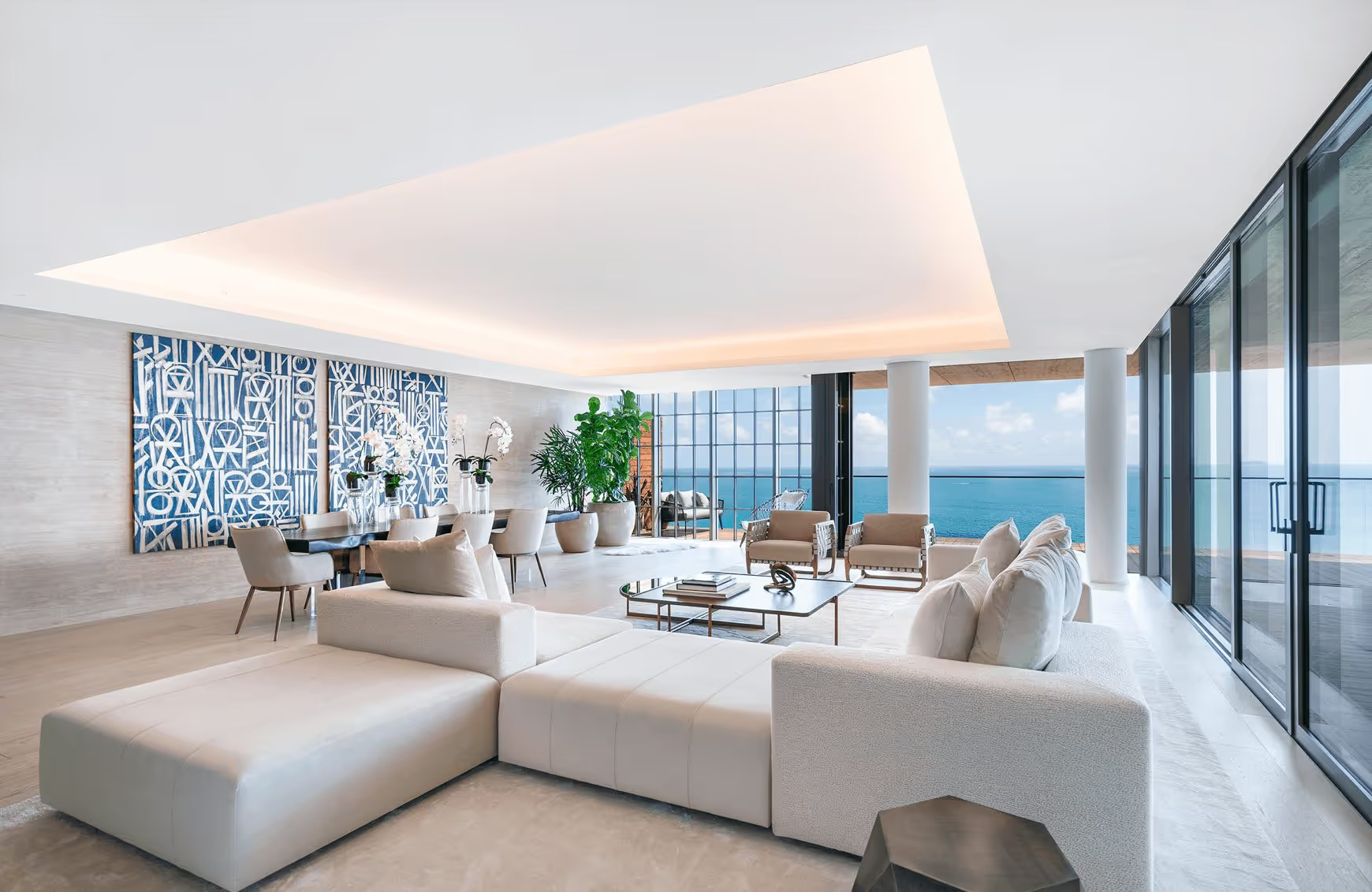
Enzo Enea, a Swiss landscape architect, handled the exterior environment. Poliform kitchens, Gaggenau appliances, Italian marble countertops, and European white oak flooring throughout. The terraces are finished with Brazilian ipê decking and travertine — materials chosen for their weathering quality over time, not their showroom appearance. The building was completed in 2020 and is now available exclusively as resale inventory — no construction risk, units can be visited, and the building's actual operation can be evaluated rather than estimated.
Architecture & Developer
Antonio Citterio is an Italian architect and designer whose career is primarily known through commercial and furniture work — Vitra, B&B Italia, Iittala, Ansaldo. His residential practice in Europe, particularly in Milan and on the Italian Riviera, has the same qualities: restraint, material seriousness, a preference for plans that feel European in their separation of spaces. Arte was his first residential project in the United States. The 2020 completion makes it a completed data point rather than a promise.
The design draws a deliberate reference to classic European apartment buildings of the 1920s and 1930s — the proportions, the relationship between facade and terrace, the entry sequence. This is not a building trying to look futuristic. Buyers who find that approach interesting tend to find the building interesting. Buyers looking for a more overtly contemporary or tropical Miami aesthetic often don't. That self-selection is useful to understand before evaluating the building.
Sapir Corp is the developer. Their name carries less weight than Citterio's in the buyer conversation, and the building largely reflects that — the developer's role was to commission an architect of this stature and execute the project to specification. The completed building is the relevant evidence of how well that worked.
Buyer Profile
The buyer who chooses Arte has usually already decided that Citterio's work is what they want — and has been looking for the right unit in the building rather than comparing Arte against other Surfside buildings as one option among many. This is a specific buyer who follows architecture, knows Citterio's furniture and commercial work, and understands what it means that this was his US residential debut.
Sizes beginning at 3,126 square feet mean every resident is committing to a large unit. There is no entry-level position in Arte. The buyer is at the upper end of the Surfside market, and the resale comps reflect that. The building also attracts European buyers — particularly Italian and German buyers who are familiar with Citterio's European work and find the design language more recognizable than the typical Miami condo aesthetic. These buyers represent a meaningful share of the Surfside upper-market buyer pool.
How It Fits the Market
Arte sits at the upper end of the Surfside mid-luxury tier, well below the Surf Club in absolute scale, but competing in a different category than the standard Surfside mid-market. It is the only completed building in Surfside that can be called a collector's architecture address in the way that a gallery represents a specific artist — you either value the specific work or you don't.
For buyers comparing Arte against Ocean House (also 25-unit oceanfront boutique, Arquitectonica, completed 2024) or against the Surf Club (Richard Meier, full Four Seasons services, larger scale), the evaluation turns on whether architecture or service model takes priority. Arte offers the former without the latter. The building has no hotel service infrastructure — it is a residential building, not a branded residence. What it offers instead is a level of architectural intentionality that no other Surfside building currently matches. For the broader Surfside context, see the Surfside real estate overview and the Surfside vs Bal Harbour comparison.