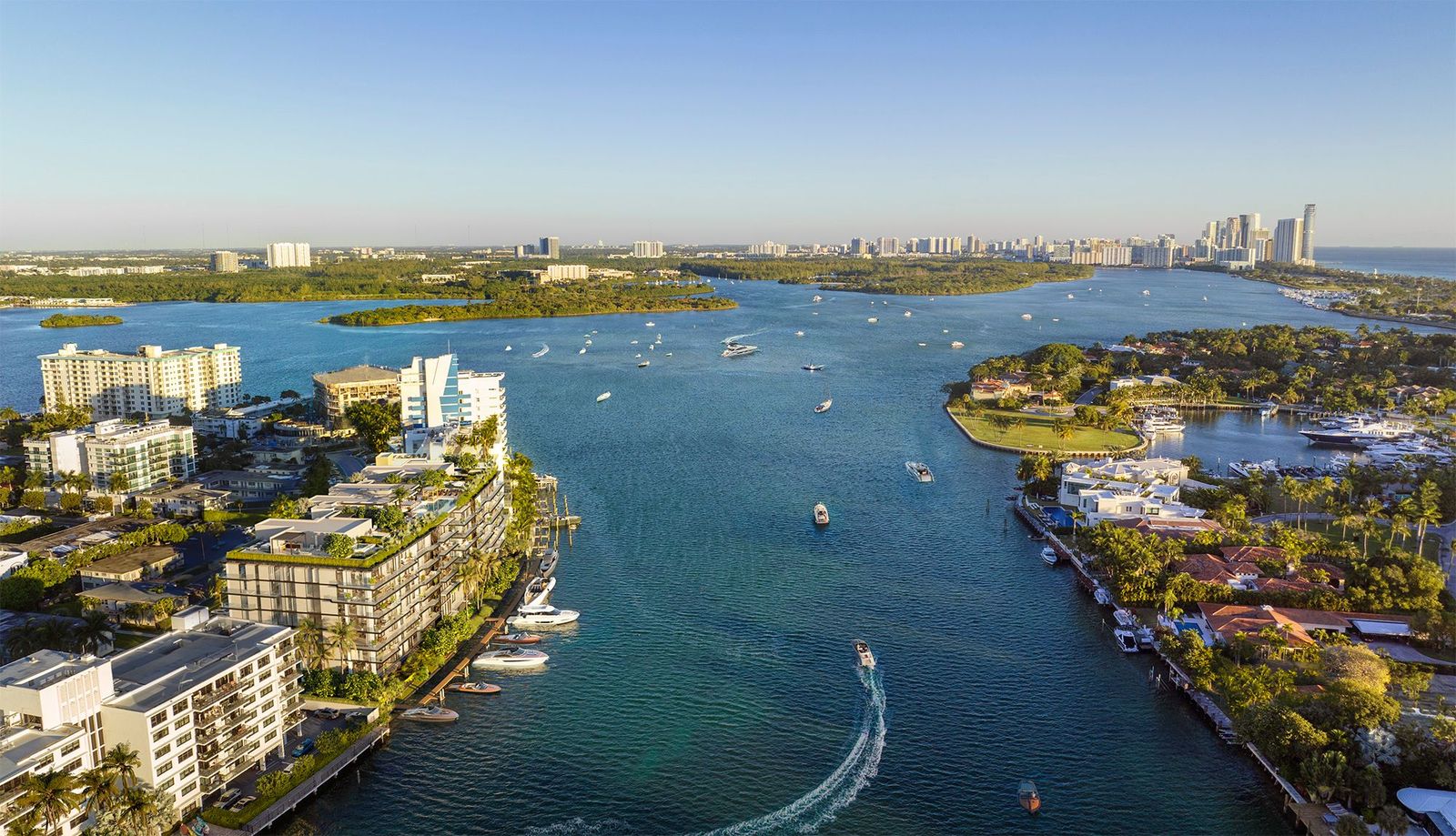
Whether to buy into a building — or how to position the one you own — now depends as much on the association's balance sheet as on the unit itself. Two changes made that concrete this summer: federal lending standards that took effect July 1, 2026 can disqualify an entire building from conventional financing over its insurance structure, and Miami-Dade County now runs a loan program that changes the math for owners facing a structural-repair assessment.
This page explains both, and what they mean in practice in Bay Harbor Islands, Surfside, and Bal Harbour — three markets where building-level finances already separate the units that sell from the units that sit.
Two Changes That Rewrote the Framework
Florida's post-2021 building laws require milestone structural inspections and funded reserves, and the buildings along this stretch of the coast have been living with the consequences: higher monthly fees where reserves were underfunded, and special assessments where inspections found real work. Two 2026 developments changed the framework again.
The lending rules. In March 2026, Fannie Mae and Freddie Mac — coordinated by their federal regulator, FHFA — issued the most significant update to condominium project standards in years. The provision that matters most here: for loan applications dated on or after July 1, 2026, a building whose master insurance policy carries a per-unit deductible above $50,000 is treated as non-warrantable. In plain terms, conventional mortgages stop being available for every unit in that building. Where a master policy uses a per-unit deductible at all, unit owners also need their own HO-6 policy with a deductible no higher than the greater of 5% of coverage or $2,500.
The relief program. Miami-Dade County relaunched its Condominium Special Assessment Loan Program on June 1, 2026 — up to $50,000 per owner at zero percent interest over 40 years, for owners at or below 140% of area median income facing assessments tied to recertification repairs, with priority for owners 62 and older and roughly $15 million in funding. The 2026 application window ran June 1–30 and is now closed; owners who missed it should have documents ready for the next cycle and can monitor the program at miamidade.gov.
What the Deductible Rule Changes in Practice
The deductible rule shifts the question a buyer's lender asks from "is this borrower qualified" to "is this building qualified." That is not a technicality. A building can be well-maintained, fully reserved, and still fail the test because its insurer priced hurricane risk into a large per-unit deductible. Sellers in that building lose every conventional-financing buyer at once — cash buyers become the market.
The pattern I watch for in these three markets: older buildings that took the cheaper insurance renewal, often to keep monthly fees down after an assessment. The savings show up in the fee schedule; the cost shows up at the closing table.
The county program cuts the other way. An assessment that once forced retirees to sell now has a financing path — which means fewer distressed listings from the buildings doing the repair work the law requires. Assessment-driven urgency has been a quiet source of negotiability in this market; where the program reaches, some of that urgency disappears.
What Buyers and Owners Should Check
For a buyer, the document request list got longer, and the order changed. Before falling in love with a unit, ask for: the master insurance policy's declaration page (the per-unit deductible is the number to find), the reserve study, the milestone inspection report if the building is 30 years or older, and the minutes from the last three board meetings — assessments are discussed long before they are levied.
For an owner, the position review is simpler but urgent: find out your building's per-unit deductible now, not when you list. If it sits above $50,000, the board has a solvable problem — but solving it takes a renewal cycle, and every month it stays unsolved narrows your buyer pool to cash. If you are facing a recertification assessment and your income qualifies, get your application package ready before the county's next window opens.
What It Means for the Market
Building-level finances were already doing the sorting in these markets; the July 1 rules formalize it. Expect the spread to widen between buildings that can document clean insurance, funded reserves, and completed inspections — and buildings that cannot. The first group keeps its full buyer pool. The second group reprices until cash buyers find it interesting.
New developments sit outside most of this — recently delivered buildings carry current-code insurance and fresh reserves, which is part of why the premium over older stock in Bay Harbor Islands' active projects has held. For context on how each market is behaving right now, the monthly reports for Bay Harbor Islands, Surfside, and Bal Harbour track it building by building.
Frequently Asked Questions
What is the new $50,000 condo deductible rule?
For mortgage applications dated July 1, 2026 or later, Fannie Mae and Freddie Mac will not back loans in buildings whose master property insurance carries a per-unit deductible above $50,000. The building becomes non-warrantable, which removes conventional financing for all of its units until the policy changes.
Can I still get a mortgage in a building with a special assessment?
Often yes — an assessment alone does not disqualify a building. Lenders look at why the assessment exists, whether the work is funded and underway, and the association's overall finances. A documented, funded repair plan reads very differently from an assessment covering a budget shortfall.
Does Miami-Dade offer help paying a condo special assessment?
Yes. The county's Condominium Special Assessment Loan Program offers eligible owners up to $50,000 at zero percent interest over 40 years for recertification-related repairs, with income limits at 140% of area median income and priority for owners 62 and older. The 2026 application window closed June 30; watch miamidade.gov for the next cycle.
What should I check about an HOA before buying a condo in Miami?
Four documents before anything else: the master insurance declaration page (per-unit deductible), the reserve study, the milestone inspection report for buildings 30 years and older, and recent board minutes. Together they tell you what the fee schedule alone hides.
Request a Building-Level Read
If you own or are considering a unit in Bay Harbor Islands, Surfside, or Bal Harbour and want a building-level read — insurance structure, reserves, assessment history, and how the building's recent sales reflect them — request a building analysis. That review is the difference between buying a unit and buying a balance sheet.